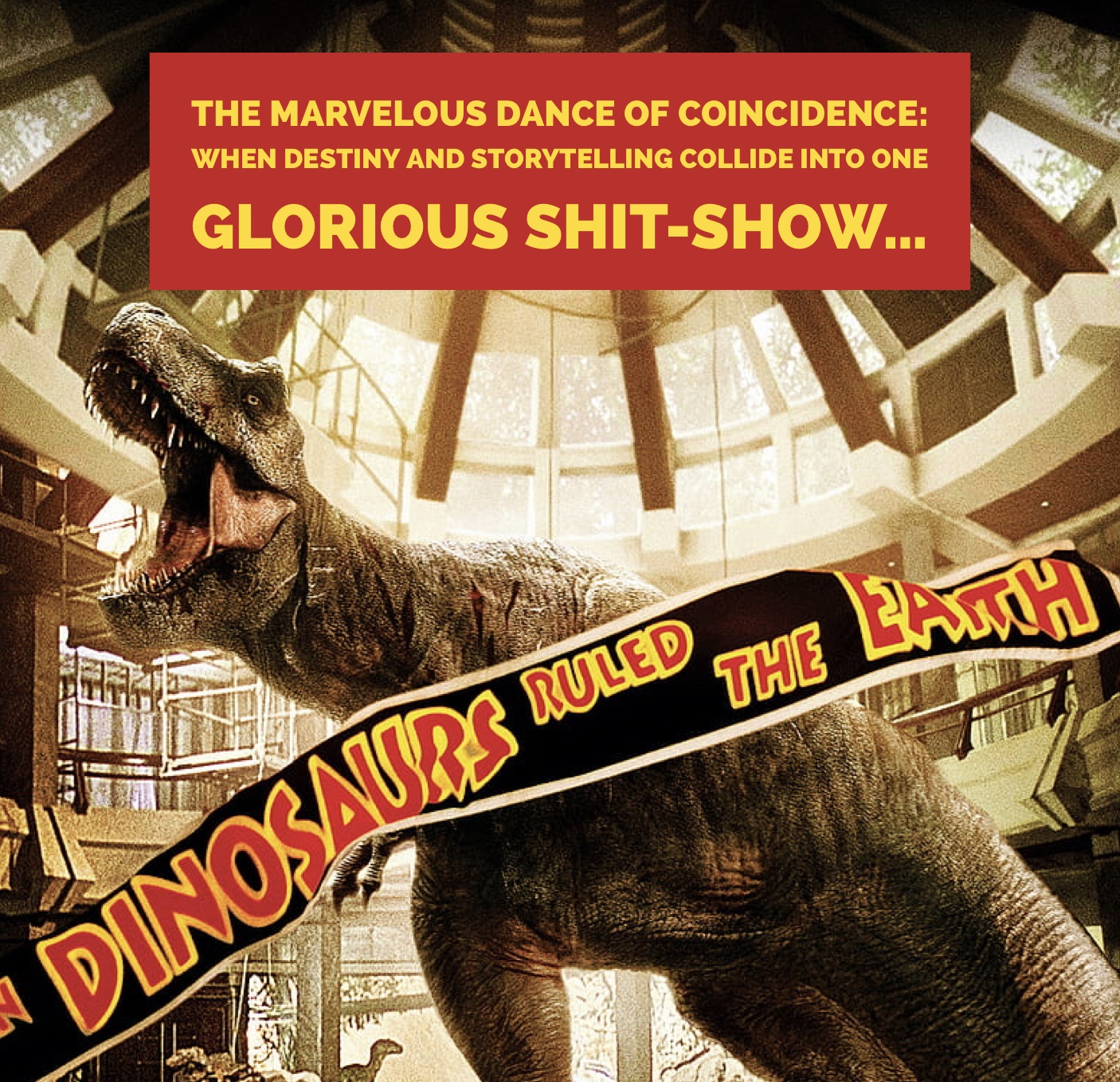
A coincidence can be a great way to set your story into motion.
“There’s nothing wrong with coincidence, per se. Almost every movie is going to have some incidents where one character just happens to be in the right place at the right time. In fact, many movies are built around a “premise coincidence.” In Die Hard, John McClane just happens to be in the building when the villains attack. That’s okay. McClane’s being there is part of the premise. Likewise, in the original Spider-Man, Peter Parker just happens to get bitten by the radioactive spider. No problem: it wouldn’t be Spider-Man otherwise.” -John August
Writers and dreamers, gather ’round for a tale as old as time -aren’t they all?- a narrative element that has both captivated and confounded storytellers since the dawn of creativity: coincidence. Yes, my dear friends, today we embark on a journey to explore the craft of employing coincidence in our beloved forms of storytelling. We shall learn how to wield this powerful tool with finesse, ensuring that our plots remain engaging, yet free from the clutches of corniness. So, fasten your seatbelts and prepare for an adventure through the realms of screenplays, novels, and video games.
The Role of Coincidence in Storytelling:
Coincidences are the whimsical wildcards of the storytelling world. They possess the incredible ability to unite characters, create unexpected turns of events, and ignite the fires of destiny. We’ve witnessed their magic in countless masterpieces, from the dramatic meeting of Rick and Ilsa in “Casablanca” to the accidental book switcheroo that brought Elizabeth Bennet and Mr. Darcy together in “Pride and Prejudice.” These moments of chance can inject our tales with a thrilling energy, effortlessly propelling our audiences forward.
Embedding Coincidences with Subtlety:
Ah, but here lies the great challenge: how do we weave coincidences into our narratives without raising eyebrows or inducing eye rolls? The key, my fellow storytellers, lies in the art of subtlety. Just like a master puppeteer pulling invisible strings, we must ensure that our coincidences remain veiled, ever-so-slightly concealed from the prying eyes of our audience.
Consider the case of video games, where players actively participate in the story. The “Uncharted” series, for instance, expertly deploys coincidences to guide players towards their destinies. Whether it’s stumbling upon ancient ruins or finding a forgotten treasure map, these seemingly chance encounters drive the story forward while leaving players none the wiser. By embedding coincidences within the game’s mechanics and environment, the developers create an immersive and believable experience.
In the realm of novels, Jane Austen was a true sorceress of subtle coincidence. In “Sense and Sensibility,” she elegantly aligns the paths of the Dashwood sisters with a series of chance encounters, allowing her characters to cross paths and forge connections in a natural and believable manner. By integrating these coincidences seamlessly into the fabric of her storytelling, Austen spins a web of fate that ensnares her readers’ hearts.
Screenplays, too, have witnessed the tango of coincidence with great success. Think of the iconic “Back to the Future” trilogy, where a chance lightning strike transports Marty McFly through time, setting the stage for unforgettable adventures. This carefully orchestrated coincidence launches us into a story that, while fantastical, remains grounded in the realm of believability, ensuring our suspension of disbelief remains intact.
The Lesson Learned: Balance and Adaptability
The lesson we must embrace is one of balance and adaptability. Coincidences, when employed with care and creativity, can elevate our narratives to new heights. They are the spices that add flavor to our storytelling stew. But like any good chef, we must ensure we don’t overwhelm our creation, nor neglect its other essential ingredients.
By skillfully blending coincidence with well-developed characters, compelling conflicts, and rich world-building, we create a symphony that resonates deeply with our audience. Let us remember that coincidences should serve the story, not overshadow it.
As we bid farewell to the marvelous dance of coincidence, let us celebrate the power it holds within the realm of creative storytelling. It is a tool that, when harnessed with subtlety and purpose, can propel our plots forward, connect characters, and keep our audience on the edge of their seats.
Remember, whether you’re a storyteller or an avid reader, the key lies in embedding coincidences seamlessly into the fabric of our narratives. Whether we’re crafting a screenplay, writing a novel, or designing a video game, we must strive for a delicate balance between fate and plausibility. Coincidences should feel organic, their presence justified within the context of the story world we have created.
So, let us take inspiration from the likes of Shakespeare’s “A Midsummer Night’s Dream,” where a series of coincidental encounters among characters in the enchanted forest weaves a tapestry of love, mischief, and transformation. Or perhaps we find guidance in the intricate puzzle pieces of Christopher Nolan’s “Inception,” where the convergence of parallel storylines and seemingly random events unravels the mysteries of the mind.
As storytellers, our duty is to guide our audience through a journey they won’t soon forget. We must surprise them, engage them, and leave them yearning for more. Coincidences, when employed thoughtfully, are but one tool in our expansive toolbox. They can add layers of depth and complexity to our tales, inviting the audience to unravel the threads of fate alongside our characters.
However, let us not rely solely on coincidence to carry our stories. It is merely a brushstroke in the grand masterpiece we are crafting. Our characters, their desires, their conflicts, and the worlds we build around them all contribute to the tapestry of our narratives. Coincidences should enhance these elements rather than replace them.
So, my fellow storytellers, embrace the enchanting dance of coincidence in your creative endeavors. Let it lead you down unexpected paths, connecting characters, unveiling truths, and leaving your audience breathless with wonder. Remember, subtlety and balance are your allies, and adaptability is your guiding star.
May your stories be a symphony of destiny and imagination, where coincidence intertwines with purpose, and the magic of storytelling takes flight.
Check out these exemplars below from familiar franchises across the industries
Video games:
- “The Legend of Zelda: Ocarina of Time”: This iconic game weaves a tale of destiny and adventure, where the young hero Link embarks on a quest to save the land of Hyrule. Throughout the game, coincidences abound, leading Link to encounter key characters and discover crucial artifacts. From stumbling upon the Master Sword in the Sacred Forest Meadow to reuniting with childhood friend Princess Zelda under unexpected circumstances, these coincidences drive the narrative and propel the player forward, all while maintaining a sense of wonder and discovery.
- “BioShock”: In this immersive first-person shooter, the player finds themselves in the underwater city of Rapture, a place brimming with mystery and intrigue. As the story unfolds, the player uncovers the secrets of Rapture through a series of seemingly coincidental encounters. Whether stumbling upon audio logs that reveal the dark past of the city’s inhabitants or encountering key characters at pivotal moments, these coincidences gradually piece together the intricate narrative puzzle, immersing the player deeper into the twisted world of Rapture.
- “The Witcher 3: Wild Hunt”: This sprawling open-world RPG is renowned for its rich storytelling and complex characters. Throughout Geralt of Rivia’s journey, coincidences play a significant role in connecting quests and shaping the narrative. Chance encounters with mysterious individuals, unexpected alliances formed under unlikely circumstances, and the convergence of multiple storylines all contribute to the sense of a living, breathing world where destiny weaves its intricate tapestry. These coincidences not only create a sense of realism within the game’s universe but also keep the player engaged and eager to uncover the next twist of fate.
In each of these video game examples, coincidences are carefully woven into the fabric of the gameplay and narrative. They serve not only to advance the story but also to immerse the player in a world where chance encounters and serendipitous events are an integral part of the game’s lore. By seamlessly integrating these coincidences, game developers can create a captivating experience that keeps players invested and curious to see how the threads of destiny unfold.
Screenplays:
- “Forrest Gump”: This beloved film showcases the remarkable life of Forrest Gump, a simple-minded yet endearing man who unwittingly finds himself at the center of several significant historical events. Coincidence plays a pivotal role throughout the screenplay, as Forrest’s path intersects with key moments in history. From meeting President Kennedy to inspiring John Lennon to pen a song, these coincidences not only shape Forrest’s journey but also provide a unique perspective on the events that defined an era. By artfully intertwining Forrest’s personal story with historical happenings, the screenplay creates a compelling narrative that blends fact and fiction seamlessly.
- “Crash”: This multi-narrative drama explores the intersecting lives of diverse individuals in Los Angeles. Coincidences serve as the connective tissue of the screenplay, linking characters from different walks of life in unexpected ways. Chance encounters, fateful collisions, and shared experiences forge bonds between characters who, at first glance, appear unrelated. These coincidences not only drive the plot but also delve into themes of prejudice, empathy, and the intricate connections that exist within a sprawling metropolis. By skillfully incorporating coincidences, the screenplay weaves a tapestry of human relationships that illuminates the complex nature of our interconnected world.
- “Pulp Fiction”: Quentin Tarantino’s masterpiece is renowned for its nonlinear narrative and a web of interconnected stories. Coincidences abound in this screenplay, blurring the lines between chance and fate. Characters cross paths unexpectedly, seemingly inconsequential encounters have far-reaching consequences, and seemingly unrelated storylines intersect in surprising ways. The strategic use of coincidences enhances the film’s suspense, keeps the audience engaged, and adds an element of unpredictability to the storytelling. Tarantino masterfully embeds these coincidences within the script, creating a narrative mosaic that subverts expectations and keeps viewers on the edge of their seats.
In each of these screenplay examples, coincidences are skillfully integrated into the fabric of the storytelling. They serve to propel the plot forward, connect characters, and explore larger thematic elements. By employing coincidences with precision and purpose, screenwriters can captivate their audience and create a sense of intrigue, while still maintaining believability within the narrative world.
Now, let’s explore how coincidence is utilized in storytelling across East Asian.
- Literature:
East Asian literature, with its rich storytelling traditions, often incorporates coincidence in ways that reflect cultural beliefs and philosophies. In Japanese literature, the concept of “en” or fate plays a significant role. The notion that certain encounters and events are predestined creates a fertile ground for coincidences to unfold. For example, in Haruki Murakami’s novel “Kafka on the Shore,” characters’ lives intertwine through seemingly chance encounters, blurring the lines between reality and the ethereal. These coincidences serve as a vehicle for exploring themes of destiny, interconnectedness, and the mysterious workings of the universe.
In Chinese literature, works such as the classic novel “Dream of the Red Chamber” by Cao Xueqin often employ coincidences to illustrate the intricate web of relationships and the role of fate in shaping characters’ lives. Chance meetings, hidden connections, and unexpected twists of destiny bring characters together, ultimately shaping the narrative and revealing deeper truths about human nature.
- Cinema:
East Asian cinema, particularly in countries like Japan, South Korea, and China, has embraced coincidence as a storytelling device in films across various genres. In films like “In the Mood for Love” directed by Wong Kar-wai, chance encounters between two neighbors spark a complex and forbidden relationship. The film utilizes coincidences to explore themes of missed opportunities, longing, and the unpredictable nature of human connections.
In South Korean cinema, the concept of coincidence often drives intricate plotlines and character development. Films like “Memories of Murder” directed by Bong Joon-ho employ coincidences to unravel the layers of a mystery, revealing the hidden connections between characters and the role of fate in their lives. These films often emphasize the interplay between chance and consequence, creating a sense of tension and unpredictability.
- Television Dramas:
Television dramas, commonly known as “doramas” in Japan and “K-dramas” in South Korea, also make use of coincidence to create compelling narratives. In these series, characters’ paths cross in unexpected ways, leading to transformative experiences and emotional journeys. Coincidences serve as catalysts for character growth, romantic relationships, and the exploration of societal issues. Shows like “Nodame Cantabile” (Japan) and “My Love from the Star” (South Korea) utilize coincidences to build intricate storylines, blending elements of romance, comedy, and drama.
In summary, East Asian literature, cinema, and television dramas embrace coincidence as a narrative tool, often exploring themes of fate, interconnectedness, and the unpredictable nature of human relationships. These works showcase the cultural perspectives and storytelling traditions of the region, weaving tales that blend reality and the supernatural, all while engaging audiences with the power of coincidence
How to use this tehhnique
To effectively use coincidence as a storytelling technique in your own creative works, consider the following steps:
- Establish the Narrative Context: Set the stage by establishing the world, setting, and characters of your story. Determine the overarching themes and conflicts that will drive your narrative.
- Identify Key Coincidental Moments: Identify specific points in your story where coincidences will occur. These could be chance meetings, unexpected discoveries, or serendipitous events that propel the plot forward or connect characters in significant ways.
- Integrate Coincidences Seamlessly: As you incorporate coincidences into your story, strive for subtlety and believability. Coincidences should feel organic to the narrative rather than forced or contrived. Develop a logical and coherent explanation for how these coincidences occur within the context of your story world.
- Use Coincidences to Advance the Plot: Ensure that each coincidence serves a purpose in advancing the plot, revealing character motivations, or adding depth to the overall narrative. Coincidences should have consequences and impact the trajectory of your story.
- Create Emotional Impact: Explore the emotional impact of coincidences on your characters. How do these chance encounters or events affect their beliefs, desires, and relationships? Use coincidences as catalysts for personal growth, conflict, or moments of realization.
- Maintain Balance and Avoid Overuse: Be mindful of the frequency and significance of coincidences in your story. Too many coincidences can strain the readers’ or viewers’ suspension of disbelief, while too few may not have the desired impact. Strike a balance that feels appropriate for your narrative.
- Reflect Cultural Contexts (if applicable): If your story is set in an East Asian context or draws inspiration from East Asian culture, consider incorporating cultural beliefs and philosophies related to fate, destiny, and interconnectedness. This can add depth and authenticity to your use of coincidences.
Remember, coincidences should enhance your storytelling rather than overshadow other essential elements such as well-developed characters, engaging conflicts, and immersive world-building. By using coincidences effectively and purposefully, you can add layers of intrigue, surprise, and emotional resonance to your creative works, captivating your audience and leaving a lasting impression
Dear Readers, I’m looking to you for feedback on my recent turn to lessons in storytelling. As I prepare for the launch of my masterclass on poetry, it is up to you to provide preliminary feedback on the style and flow of these brief lessons.
Questions? Comments? Concerns? Criticisms?
All are welcome!
I truly hope you are well and thank you for visiting with me today.
Cheers,
Nicholas

Leave a Reply