
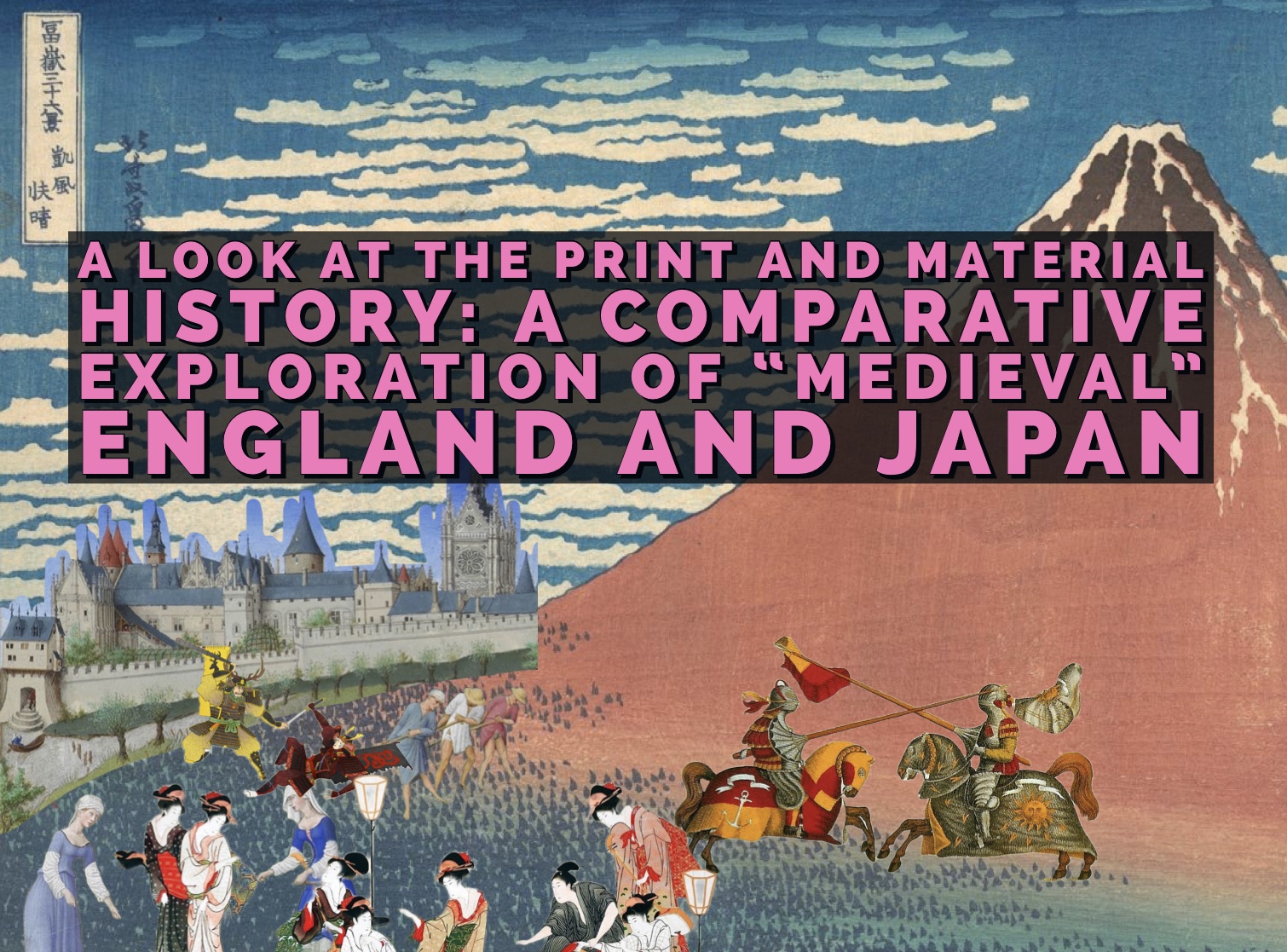
Ah, the print and material history of medieval England and Japan. A fascinating topic indeed. During this period, both regions witnessed significant developments in their respective print cultures and material production. However, it is important to note that the contexts and specific characteristics differed due to the unique cultural, social, and technological factors at play.
In medieval England, the print culture was primarily shaped by the introduction of the printing press in the 15th century, which revolutionized the dissemination of information. The printing press allowed for the mass production of books, pamphlets, and other printed materials, enabling the spread of knowledge and ideas on a scale previously unseen. This led to the rise of vernacular literature, such as Geoffrey Chaucer’s “The Canterbury Tales,” which played a pivotal role in shaping English literature.
On the other hand, medieval Japan had a rich tradition of print culture centered around woodblock printing, known as “ukiyo-e.” Ukiyo-e prints were primarily used for commercial purposes, such as illustrated books, prints of famous landscapes, kabuki theater scenes, and portraits of actors and courtesans. The woodblock printing technique allowed for vibrant and detailed prints, reflecting the aesthetics and cultural values of the time. Notably, ukiyo-e prints also played a significant role in the development of manga and anime styles in modern Japan.
In terms of material history, medieval England saw advancements in various crafts and industries. The production of textiles, especially wool, was a major economic driver during this period. The English wool trade flourished, leading to the establishment of guilds and the growth of market towns. Additionally, the production of manuscripts and illuminated texts by skilled scribes and artists showcased the importance of religious and cultural patronage.
In contrast, medieval Japan excelled in the production of ceramics, lacquerware, and metalwork. Japanese ceramics, such as the renowned celadon and stoneware, demonstrated exquisite craftsmanship and innovative glazing techniques. The development of lacquerware reached new heights, with intricate designs and vibrant colors adorning various objects, from boxes to armor. Metalwork, including the production of swords and armor, showcased the exceptional skills of Japanese artisans and their dedication to craftsmanship.
While both medieval England and Japan experienced advancements in print and material culture, the specific forms, techniques, and purposes varied. The printing press in England fueled the growth of the written word, while woodblock printing in Japan created a visual language that influenced art forms for centuries to come. In terms of material history, England excelled in textiles and illuminated manuscripts, while Japan showcased its mastery in ceramics, lacquerware, and metalwork. These distinct cultural expressions reflected the unique societal values, artistic traditions, and technological innovations of each region during the medieval period.


On Poetry
Let’s explore two lesser-known pieces of poetry from medieval England and Japan, highlighting their unique characteristics and drawing comparisons between them. In the aesthetic approach of comparative studies we seek to find the similarities, to tease out the humaneness, and less the differences. They say comparison is the thief of joy, but I disagree. When seeking to understand one another across this complex and vast planet there is good reason to focus on that which drives our humanity, whether it’s sacred, profane, or subliminal.
From medieval England, we have the poem “Pearl” or “Sir Gawain and the Green Knight.” “Pearl” is a dream vision poem written by an anonymous poet, showcasing intricate rhyme schemes and alliteration. It tells the story of a grieving father who has lost his beloved daughter, symbolized by a precious pearl. The poem explores themes of loss, redemption, and spiritual awakening through vivid imagery and allegory. It demonstrates the influence of Christian theology and courtly love conventions prevalent in medieval English literature.
On the other hand, from medieval Japan, we have the “Hōjōki” or “An Account of My Hut” by Kamo no Chōmei. This work is a poetic essay, a form known as “zuihitsu,” and was written by a Buddhist monk. “Hōjōki” reflects Chōmei’s contemplative retreat from worldly affairs to live a simple life in a thatched hut. The piece explores themes of impermanence, solitude, and the transitory nature of existence. Through vivid descriptions of nature and introspective musings, Chōmei contemplates the human condition and the pursuit of inner peace.
Comparing the two, “Pearl” and “Hōjōki” share a common focus on spiritual themes and the exploration of human emotions. Both poems delve into existential questions and offer reflections on the transient nature of life. However, they differ in terms of their cultural influences and literary techniques. “Pearl” draws heavily on Christian symbolism and courtly love traditions, while “Hōjōki” is steeped in Buddhist philosophy and Zen aesthetics.
In terms of poetic structure, “Pearl” utilizes intricate rhyme schemes and alliteration, which were characteristic of medieval English poetry. In contrast, “Hōjōki” follows a more fragmented and contemplative style, typical of the zuihitsu form. It incorporates vivid descriptions of nature and personal observations, creating a sense of immediacy and introspection.
Both “Pearl” and “Hōjōki” exemplify the poetic and philosophical depth of their respective cultures. They offer glimpses into the concerns, beliefs, and artistic sensibilities of medieval England and Japan. These lesser-known works serve as valuable additions to the literary canon of each country, offering insights into the human experience and the artistic expressions of their time.

Leave a Reply