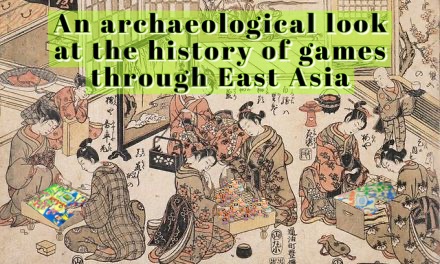
As an archaeologist and historian of gameplay and material culture, I’d be delighted to provide you with a brief overview of the history of games in East Asia and beyond the Western canon. Games have been an integral part of human culture for centuries, serving as a source of entertainment, education, and social interaction. Let’s dive into the rich gaming traditions of East Asia and explore some lesser-known games from outside the Western world.
East Asia has a long and diverse history of games, with notable contributions from China, Japan, Korea, and other neighboring regions. In ancient China, board games like Go (known as Weiqi) emerged over 2,500 years ago and continue to be widely played today. Go is a strategic game played on a grid, where players compete to control territory by placing stones. Another famous Chinese game is Mahjong, which originated in the Qing Dynasty and involves skill, strategy, and a bit of luck.
Moving to Japan, the country has a vibrant gaming culture with a blend of traditional and modern games. Shogi, also known as Japanese chess, has roots in ancient India and is still popular. It features a unique set of pieces and complex gameplay. Hanafuda is another traditional Japanese card game that gained popularity during the 18th century. It uses a deck of cards adorned with floral motifs and is played for both entertainment and gambling purposes.
In Korea, traditional board games like Yutnori and Janggi have been enjoyed for centuries. Yutnori is a game of chance played with sticks, while Janggi is often compared to chess, though it has its own distinct rules and game pieces. These games have deep cultural significance and are often played during holidays and family gatherings.
Beyond East Asia, various regions around the world have their own unique gaming traditions. For instance, in India, the game of Pachisi originated around the 6th century and was played on intricately designed boards. It served as a way to teach strategic thinking and decision-making. Mancala, a game played across Africa and parts of the Middle East, involves moving stones or seeds around a series of pits or holes carved into a board, promoting critical thinking and counting skills.
Throughout history, games have evolved alongside technological advancements. Today, video games and online gaming have become global phenomena, bridging cultures and connecting players from all corners of the world. From the classic games deeply rooted in East Asian traditions to the lesser-known gems outside the Western canon, the rich history of games continues to captivate and inspire players worldwide.
This overview only scratches the surface of the fascinating history of games in East Asia and beyond. Should you wish to delve deeper into specific aspects or explore particular games, feel free to ask! But let’s dive into familiar territory going forward…
The History of Gaming in Japan
Let’s delve deeper into the history of games in Japan and explore their connection to religion, culture, and their trajectory into the future.

In Japan, the history of games can be traced back through the archaeological record, revealing a rich tapestry of traditional games and their cultural significance. Archaeological evidence suggests that ancient Japanese society engaged in various forms of gaming, including dice games, board games, and even gambling.
One of the oldest recorded Japanese board games is Sugoroku, which emerged during the Heian period (794-1185). Sugoroku was often associated with religious practices and served as a means of divination and fortune-telling. It featured a board with various squares or spaces and was played with dice or numbered sticks. Over time, Sugoroku evolved into different versions, some purely for entertainment purposes.
Religion has played a significant role in shaping Japan’s gaming culture. Shinto, the indigenous religion of Japan, is deeply intertwined with nature and the spiritual realm. Many traditional games incorporate elements of Shinto beliefs, folklore, and mythical creatures. For example, Karuta, a card game originating from the Edo period (1603-1868), features cards depicting scenes from classical literature, including tales of gods, heroes, and supernatural beings.
The cultural impact of games in Japan cannot be overstated. Traditional games often reflect societal values, promote social bonding, and teach important life lessons. The concept of “mai-nichi-gi” or “daily ritual” refers to the practice of engaging in a specific game or recreational activity each day. This concept demonstrates the role of games as a form of leisure and relaxation deeply ingrained in Japanese culture.
In recent times, Japan has witnessed a dynamic evolution in its gaming industry. The country has become a global powerhouse in video game development, with iconic franchises such as Super Mario, Pokémon, and Final Fantasy captivating audiences worldwide. These games not only entertain but also showcase Japan’s creativity, technological prowess, and unique storytelling traditions.
Moreover, the influence of Japanese games extends beyond entertainment. The concept of “gamification” has gained popularity, where game mechanics and elements are incorporated into non-gaming contexts such as education, business, and healthcare. By leveraging the engaging and motivational aspects of games, various industries are exploring innovative ways to enhance user experiences and achieve desired outcomes.
Looking to the future, virtual reality (VR), augmented reality (AR), and immersive technologies hold tremendous potential in shaping the gaming landscape. Japan, with its expertise in technology and game design, is at the forefront of these advancements. The integration of VR and AR into gaming experiences can offer unprecedented levels of immersion, interactivity, and storytelling, paving the way for new realms of exploration and cultural exchange.
In conclusion, games in Japan have evolved over centuries, leaving a profound imprint on religion, culture, and society. From ancient board games with divinatory functions to modern video games that transcend borders, games continue to captivate and connect people. As technology continues to advance, the future of gaming in Japan promises exciting developments that will further enrich our experiences and bridge cultural divides.
If you have any specific questions or would like to explore any aspect further, feel free to ask!
Seeing the World Through A New Lens: Homo Fabuludens?

Introducing the field of LudoArchaeology, a playful yet academic discipline that delves into the evolutionary trajectory of Homo sapiens as storytelling gamer apes! As we explore this fascinating realm, let’s consider some whimsical scientific names for our gaming ancestors:
- Ludus sapiens: This name combines “Ludus,” the Latin word for game, with “sapiens,” emphasizing the intelligence and cognitive abilities of our ancestors as they engaged in games and storytelling.
- Homo narrativus ludens: Combining “narrativus,” derived from the Latin word for storytelling, with “ludens,” which means playing, this name highlights the intertwined nature of storytelling and gaming in our species.
- Homo ludicus fabulator: “Ludicus” draws from the Latin word for playful, while “fabulator” refers to storytellers. This name emphasizes the playful and imaginative nature of our ancestors as they crafted narratives through games.
- Homo narrans ludens: Merging “narrans,” Latin for narrating, with “ludens,” this name underscores the dual roles of Homo sapiens as both storytellers and gamers throughout our history.
- Homo fabuludens: Combining “fabula,” Latin for story, with “ludens,” this name captures the essence of our ancestors’ playful engagement with storytelling, emphasizing the joy and creativity inherent in their gaming practices.
- Homo mythogamia: Drawing from the Greek words “mythos” for myth and “gamia” for marriage, this name playfully suggests the union of storytelling and gaming in our species’ cultural evolution.
These imaginative scientific names serve to reflect the lighthearted and academic spirit of LudoArchaeology, as we explore the fascinating journey of Homo sapiens as storytelling gamer apes. Remember, while playful, these names are intended to spark curiosity and further investigation into the intricate relationship between games, storytelling, and our human experience.
So, let the field of LudoArchaeology take flight, unraveling the secrets of our gaming ancestors, and shedding light on the captivating narrative of Homo sapiens as the ultimate gamers!
—-
Incorporating the History of Games and Play into your own stories
The rich histories of games and their cultural significance can be harnessed to enhance storytelling in various gaming contexts, such as tabletop role-playing games like Dungeons & Dragons (D&D). Here are a few ways to incorporate these histories into a storytelling framework:
- Worldbuilding: Drawing inspiration from the diverse games and their histories, you can create detailed and immersive game worlds with their unique gaming traditions. For example, you can design a region where a board game similar to Go holds deep religious and strategic importance, and its outcome influences the fate of kingdoms or shapes the narrative arc of the campaign.
- Cultural Significance: Integrate the cultural significance of games into the narrative fabric of your game. Showcase how games play a role in religious rituals, social hierarchies, or even political negotiations within the game world. By portraying games as more than mere entertainment, you add depth and authenticity to the cultures and societies your players encounter.
- Quests and Challenges: Incorporate game-themed quests or challenges into your storytelling. Players could embark on a quest to recover a legendary gaming artifact, engage in a high-stakes gambling tournament, or solve riddles and puzzles inspired by traditional games. These quests can serve as engaging and memorable experiences for the players, immersing them in the gaming history of the world you’ve created.
- Character Development: Games can be used as a vehicle for character development and interaction. Create moments where characters engage in friendly or competitive games, allowing them to bond, showcase their skills, or resolve conflicts through gameplay. This provides opportunities for role-playing, character growth, and the exploration of individual backstories.
- Ethical Dilemmas: Utilize games to introduce ethical dilemmas and moral choices within the game narrative. Present situations where characters must navigate the consequences of their actions in a game-like scenario, challenging their values, and exploring complex ethical themes.
Remember, the goal is to weave the history and cultural significance of games seamlessly into your storytelling, enhancing the immersive experience for your players. By incorporating these elements, you create a vibrant and authentic game world that reflects the depth and breadth of human gaming traditions throughout history.
So, whether you’re a game master, storyteller, or player, embracing the histories of games can add an extra layer of richness and engagement to your tabletop role-playing experiences.
——
Using ancient boardgames, play as a mechanic in your D&D campaign
Certainly! Let’s explore how integrating the board game experience of Go, originating from medieval China, could illuminate a specific experience in Dungeons & Dragons (D&D).
Imagine that your D&D party is navigating a treacherous labyrinth within an ancient monastery. To progress further, they encounter a magical chamber guarded by a wise monk who challenges them to a game of Go. The monk explains that the chamber’s barrier can only be lifted by winning a game against him, as per the ancient monastery’s traditions.
Here’s how this integration can unfold:
- Gameplay Mechanics: Use the rules and mechanics of Go to create the challenge. The players and the monk each take turns placing stones on a Go board, strategically trying to capture territory and outmaneuver each other. The outcomes of their moves directly impact the progress of the game.
- Strategic Decision-Making: As the players engage in the game, they can strategize, analyze the board state, and make critical decisions to gain an advantage. This mirrors the tactical decision-making required in their D&D adventures, where planning, teamwork, and clever moves are key.
- Role-Playing Opportunities: Throughout the game, allow the players to engage in role-playing interactions with the monk. They can seek advice, share stories, or negotiate certain aspects of the challenge. These interactions deepen the immersion, allowing players to explore their characters’ personalities and motivations.
- Symbolic Elements: Introduce symbolic elements tied to Go’s cultural significance. For instance, describe the placement of stones representing the ebb and flow of cosmic forces or the struggle between light and darkness. This imbues the game with a deeper, metaphysical layer, reflecting the mystical traditions of the ancient monastery.
- Consequences and Rewards: The outcome of the game determines the consequences and rewards for the players. Winning could unlock a secret passage, reveal hidden knowledge, or grant the party a powerful artifact or boon. Losing, on the other hand, may impose additional challenges or setbacks that the players must overcome.
By integrating the board game experience of Go into the D&D session, you bring a unique and immersive challenge to the players. It allows them to engage in strategic gameplay, make meaningful choices, interact with NPCs, and uncover new story elements tied to the monastery’s ancient traditions.
Remember, the goal is to create an engaging and memorable experience for the players, while also drawing upon the rich history of games to add depth and authenticity to your D&D world. Feel free to adapt and tailor this example to suit your campaign’s specific themes and narratives.
Happy gaming!
Side quest idea
Integrating the game of Go into an existing D&D campaign to create a side quest for the adventurers can add an exciting and strategic element to their journey. Here’s an example of how Go could be incorporated:
- The Enigmatic Go Master: The adventurers stumble upon rumors of a mysterious and reclusive Go master residing in a remote village. Locals speak of their unparalleled skill and a hidden treasure said to be bestowed upon those who can defeat them in a game of Go.
- The Village’s Plight: The village, plagued by a recent series of misfortunes, seeks the aid of the adventurers. They explain that the Go master has been withdrawn and despondent, refusing to play with anyone. The village’s prosperity seems to have waned as a result, and they desperately need the Go master’s blessings to turn their fortunes around.
- Uncovering the Go Master’s Story: Through investigation and exploration, the adventurers learn that the Go master has experienced a great personal loss, which has affected their willingness to engage with the world. They discover that the Go master’s motivation to play again lies in reconnecting with their passion for the game and finding closure.
- Challenges and Strategies: The adventurers must now prove their worth by playing a game of Go against the Go master. The challenge could involve a series of matches, each with increasing difficulty and unique obstacles to overcome. The Go master’s moves can reflect their emotional state, making the games more challenging and captivating.
- Narrative and Character Development: As the adventurers engage in the game, allow for role-playing opportunities and interactions with the Go master. Encourage dialogue, sharing of personal stories, and moments of empathy. This provides the chance for character development and emotional growth, both for the adventurers and the Go master.
- Rewards and Consequences: Based on the outcome of the Go matches, the adventurers’ success or failure can impact the village and its inhabitants. Victory could restore prosperity to the village, mend the Go master’s spirit, and reward the adventurers with the hidden treasure promised. Conversely, defeat might lead to further hardships or present new challenges the adventurers must overcome.
By integrating the game of Go into the existing D&D campaign as a side quest, you infuse the adventure with strategic gameplay, emotional depth, and meaningful choices. This quest allows the adventurers to explore the nuances of the Go master’s story, while also impacting the lives of the village’s inhabitants and their own character arcs.
Feel free to adapt and expand upon this example to align with your campaign’s setting, themes, and the desires of your players. Remember, the goal is to create an engaging and memorable quest that intertwines the rich history of Go with the immersive world of D&D.

Leave a Reply