
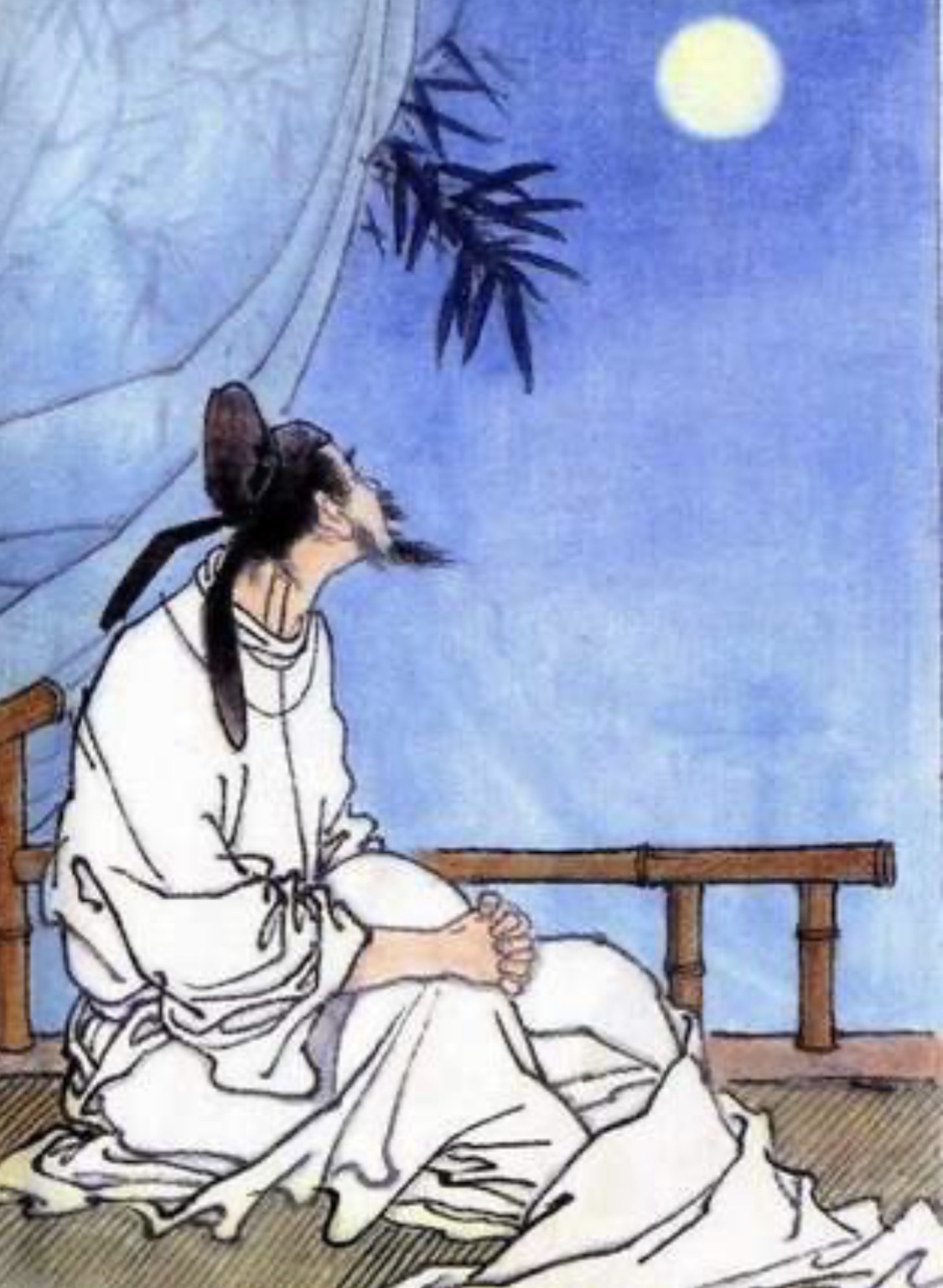
Title: The Sine Qua Non of the Art and Science of Poetry Writing
Introduction:
Poetry, often described as the language of the soul, is a unique form of expression that marries the artistry of words with the precision of science. To craft a poem that resonates deeply with readers requires a delicate balance between creativity and structure, imagination and technique. In the world of poetry writing, there exists a fundamental concept that serves as the sine qua non—the indispensable element—of this craft. This crucial component is none other than “Emotion.”
The Power of Emotion in Poetry:
Emotion is the heartbeat of poetry. It is the driving force behind every line, stanza, and metaphor. Without genuine emotion, a poem remains lifeless words on a page. Emotion infuses poetry with depth, allowing it to transcend mere language and connect with the reader on a profound level.
- Empathy and Understanding: Emotion in poetry enables the poet to empathize with the human experience, transcending cultural, linguistic, and temporal boundaries. It allows poets to understand the joys, sorrows, and complexities of life and articulate them in verse.
- Reader Engagement: Emotion acts as a bridge between the poet and the reader. When a poet infuses their work with authentic emotion, readers can relate to the sentiments expressed. This connection deepens the reader’s engagement and makes the poem memorable.
- Universal Appeal: Emotion in poetry is universal. It transcends age, gender, and background, making poetry a timeless art form. The emotions captured in poems from centuries past still resonate with contemporary readers.
The Science of Emotion in Poetry:
While poetry is often associated with raw emotion, the science of poetry lies in the poet’s ability to evoke and control emotions deliberately. Here are a few scientific aspects of emotion in poetry:
- Imagery and Sensory Language: Poets use vivid imagery and sensory language to trigger specific emotions in readers. By appealing to the senses, poets can make readers feel joy, sadness, or nostalgia.
- Metaphor and Symbolism: Metaphors and symbolism are tools poets employ to convey complex emotions. Through these literary devices, poets can express abstract concepts in tangible, emotional terms.
- Rhythm and Meter: The rhythmic structure of a poem can affect the emotional response it generates. A fast-paced, energetic rhythm may convey excitement, while a slow, measured meter can evoke contemplation.
So it goes without saying: In the art and science of poetry writing, emotion is the linchpin that holds the entire craft together. It is the essential element that breathes life into words and transforms them into meaningful verse. As poets, we must harness the power of emotion to create poems that touch the heart, stir the soul, and leave a lasting impact on our readers. In this fusion of art and science, we find the true essence of poetry—the sine qua non that makes it an enduring and captivating form of expression.

But does poetry even exist at all?
Argument 1: Poetry is All-Encapsulating
Poetry is often celebrated as a genre that knows no bounds, a realm where creativity has limitless freedom. This argument suggests that poetry’s power lies in its ability to encompass the entire spectrum of human experience and emotion.
Quote 1: “Poetry is the spontaneous overflow of powerful feelings: it takes its origin from emotion recollected in tranquility.” – William Wordsworth
Analysis: Wordsworth’s quote emphasizes the deeply emotional nature of poetry. He suggests that poetry is born from the wellspring of human emotion, and this emotional richness is what allows poetry to encompass a wide range of feelings and experiences.
Quote 2: “Poetry is the lifeblood of rebellion, revolution, and the raising of consciousness.” – Alice Walker
Analysis: Alice Walker’s quote underscores the transformative potential of poetry. It can be a tool for rebellion against injustice, a catalyst for revolutions, and a means to awaken people to new perspectives. This expansive role of poetry demonstrates its ability to encapsulate societal and political dimensions.
Citation: Wordsworth, William. “Lyrical Ballads, with a Few Other Poems.” 1798.
Citation: Walker, Alice. “The World Will Follow Joy: Turning Madness into Flowers.” The New Press, 2013.
Argument 2: Poetry is Limited to Form
This argument posits that while poetry may be a vehicle for expressing emotion and experience, it is intrinsically bound by its forms and structures. In this view, the limitations of rhyme schemes, meter, and line breaks define and confine poetry.
Quote 1: “A poem should not mean but be.” – Archibald MacLeish
Analysis: MacLeish’s quote suggests that a poem’s essence lies in its form and structure rather than in its ability to encapsulate meaning. It underscores the idea that a poem’s meaning is derived from its physical and linguistic properties.
Quote 2: “Writing free verse is like playing tennis with the net down.” – Robert Frost
Analysis: Robert Frost’s quote humorously points out that traditional poetic forms, like the net in tennis, provide structure and challenge. Removing these constraints, as in free verse, may lead to a less defined, less purposeful outcome.
Citation: MacLeish, Archibald. “Ars Poetica.” Poetry Magazine, 1926.
Citation: Frost, Robert. “Interview with Wallace Stegner.” Paris Review, 1960.
In the ongoing debate about the nature of poetry, these arguments represent two distinct viewpoints. Whether one believes that poetry’s power lies in its boundless capacity to encapsulate human experience or that it is defined and shaped by its inherent forms, the essence of poetry continues to evolve and inspire. Poetry’s true beauty may well be found in the tension between these two perspectives, where creativity and structure intertwine to create enduring works of art.
In the realm of poetry, the debate over whether it is all-encapsulating or confined by form has raged for centuries, much like the philosophies that underlie it. Yet, perhaps the resolution to this dialectic paradox lies in the very essence of poetry itself. For as we delve into the rich tapestry of Chinese philosophy, we find echoes of this contemplation in the words of scholars and poets who have sought to unravel the mysteries of existence.
The Daoist concept of the Dao, often described as “The Way,” embraces the idea that all is interconnected, that life is an unbroken continuum, and that distinctions blur in the grand tapestry of existence. Echoing this sentiment, the revered Chinese philosopher Laozi wrote, “The Dao that can be told is not the eternal Dao.” In other words, the Dao, like poetry, defies confinement within mere words.
The great Tang dynasty poet Wang Wei, known for his landscapes that breathe with life, mused, “My paintings and poems are all a single brush.” Here, he underscores the seamless fusion of art and existence, much like the Dao itself.
In this light, poetry is not a mere medium of expression; it is life itself. It permeates all things, transcending boundaries and form, much like the Dao that flows through the universe. To confine poetry within the parameters of definition is to attempt to grasp the ungraspable. Poetry is not something that exists; it is everything—every whisper of the wind, every tear shed, and every heart that beats in rhythm with the universe.
As we navigate the endless currents of poetic expression, we find that poetry is, at its essence, an exploration of the ineffable, an attempt to capture the fleeting moments of existence, and an acknowledgment that in the fluidity of life, words, and forms dissolve into the boundless. It is the ceaseless dance of creation and dissolution, and like the Dao, it eludes definition and containment.
So, let us embrace this paradox, for within it lies the true beauty of poetry—a reminder that life, like poetry, is an ever-evolving, boundless, and all-encompassing journey, where the lines between existence and expression blur into exquisite unity. In this, we find that poetry, in all its enigmatic glory, is not confined; it is the very essence of existence itself, flowing through the veins of the cosmos.
On that note, how about reading some (nonextant) poetry!

Join the list
Join hundreds of our subscribers and be the first to know about new content and special offers.
- Confession: On Scattered Altars and the Art of Finishing Things and New Poetry
- Protected: Introducing “Lu and Monie Glow Up” – Writing a New Animated Series About Found Families, Neurodivergence, and Living Artfully
- Reclaiming the Frame: Female-Led Comics and the Rise of Heroine-Centered Narratives
- Creating Between Coasts: Being an Artist-Scholar in Kansas City
- My process and an Essay on New Poem: fortitudine vincimus

Leave a Reply